
Member Feature: DDA Law Firm
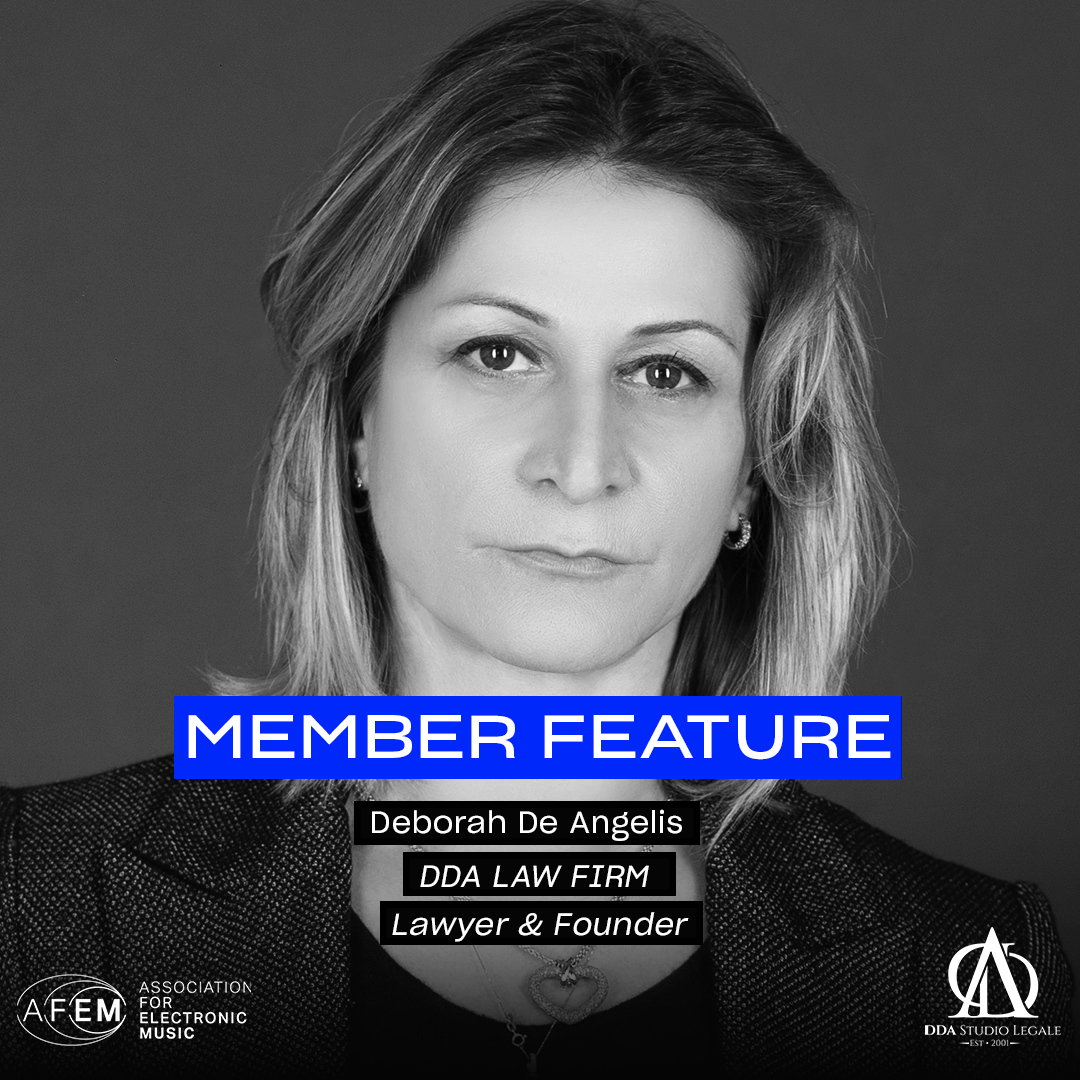
As electronic music continues to evolve at pace, the frameworks that protect artists, creators, and rights-holders are being tested like never before. Legal insight, long-term thinking, and education are no longer background concerns, they’re central to how the industry moves forward.
In this Member Feature, we speak with Deborah De Angelis, founder of DDA Law Firm and co-chair of AFEM’s Education Working Group, about the role of law in shaping a fairer, more future-ready electronic music ecosystem. From advising international artists and institutions to navigating the fast-changing realities of AI, rights management, and remuneration, Deborah shares how legal practice, policy, and collaboration can actively support creativity rather than constrain it.
1. Share a milestone or achievement for which your company is particularly proud.
Since founding DDA Law Firm in Rome in 2000, I have had the privilege of assisting and advising numerous international artists, DJs, music publishers, and producers. Among the most significant achievements was my appointment, in 2019, as Legal Advisor to the Italian Ministry of Culture for copyright, where I contributed to shaping national policies on music and entertainment law, enhancing the protection and regulation of authors’ and performers’ rights.
2. Name one trend in electronic music that is shaping your current business strategy.
A key trend shaping our current business strategy is the increasing impact of artificial intelligence on music creation and rights management. This is driving us to develop new legal frameworks and advisory services to address copyright, licensing, and fair remuneration challenges for artists, DJs, producers, and music publishers.
3. Does your company collaborate with other industry stakeholders to drive growth and opportunities within the electronic music community? And if so, how and who?
The law firm actively collaborates with key stakeholders across the electronic music community, working with international labels, publishers, artists, collective management organisations, universities, and educators to develop industry standards and create valuable resources, such as the Legal Guide for DJs and Producers, realised within the AFEM Education Working Group.
4. What does it mean for you to be a member of AFEM?
Being a member of AFEM means contributing to a global network that drives positive change in the electronic music industry. It allows me to collaborate with leading professionals to promote fair practices, strengthen legal frameworks, and create educational resources, ensuring that artists, DJs, and producers can thrive in a sustainable and well-regulated environment.
5. One project, collaboration, or initiative you’re currently working on that you’re particularly excited about.
I am particularly excited about my collaboration with the FAIR MUSE EU project, which focuses on promoting fairness, accessibility, and innovation in the music sector. Through this project, we are developing strategies to ensure equitable remuneration for artists and greater transparency in music licensing and data management. It’s a forward-looking initiative that brings together legal expertise, technology, and cultural stakeholders to build a more sustainable and inclusive future for electronic music.
Are you an AFEM member interested in being featured? Reach out to our team to take part in this series. We’re proud to highlight the voices shaping electronic music and look forward to sharing more from our community in the months ahead!