
Member Feature: Distorted
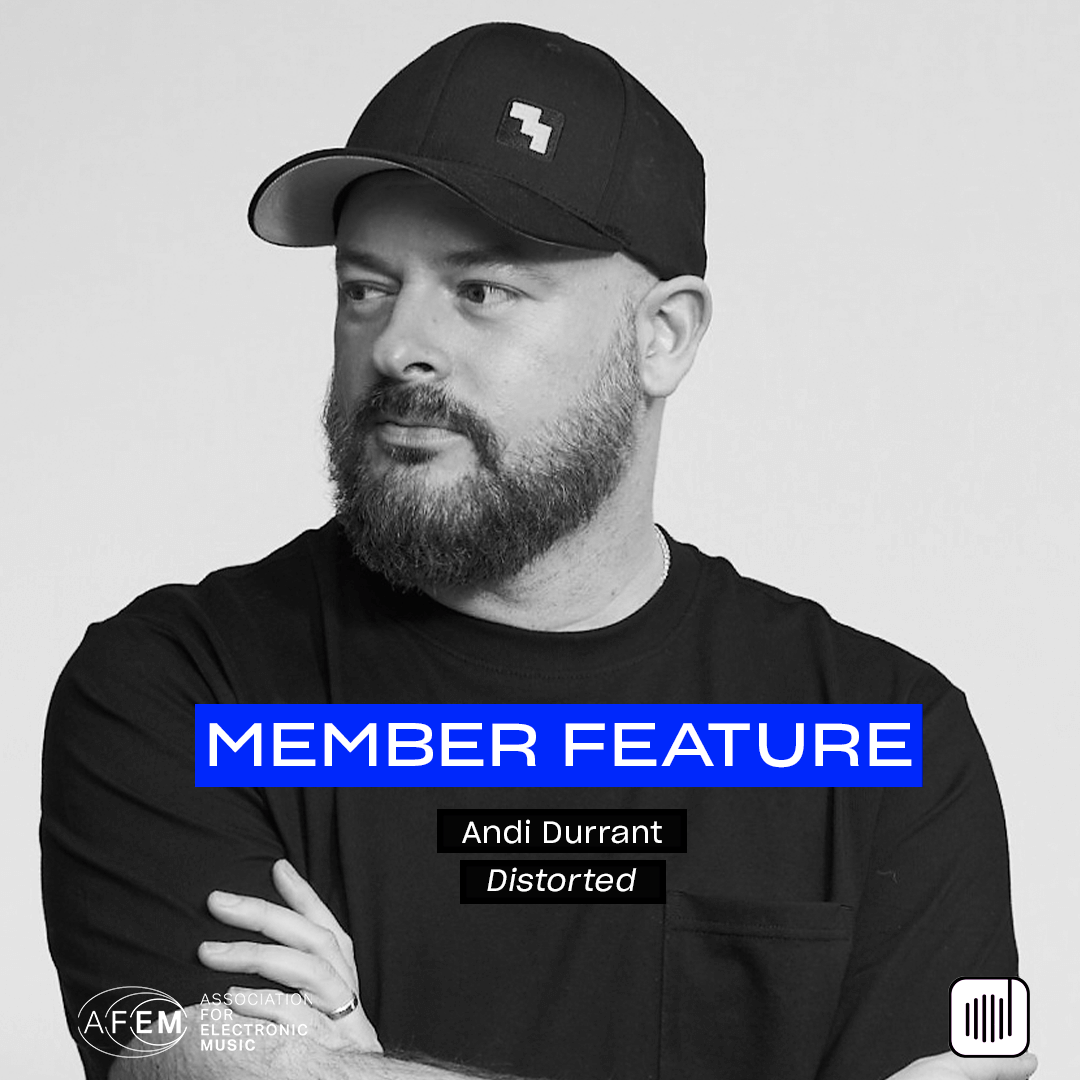
In an era where visibility often outweighs depth, AFEM member Distorted is proof that long-term success in electronic music is still built on connection, consistency, and community. Founded by broadcaster and producer Andi Durrant, the company has spent over a decade creating radio shows and podcasts for some of the world’s biggest electronic artists and labels—deadmau5, Don Diablo, Defected, and more—while championing emerging voices and industry inclusivity. In this feature, Andi shares lessons from 12+ years at the intersection of broadcasting and brand-building, including insights on fan loyalty, artist wellbeing, and the power of audio in an algorithm-driven world.
1. Name your company and your role.
Director of Distorted
2. Share a milestone or achievement for which your company is particularly proud.
I’d say longevity is one of our most significant achievements. It’s been nice to win awards and shout about millions of downloads or listeners, but actually staying healthy and growing a company over the last decade in what has been a very tumultuous and fast moving industry has been both challenging and hugely rewarding. We celebrated our 12th year in business recently, and lot of our clients have been with us for a large part of that journey. Recent milestones include deadmau5 racking up 300 episodes of mau5trap Radio, Don Diablo hitting 500 editions of Hexagon Radio, or Defected who must be heading towards a thousand programmes by now. Long term partnerships have always been one of our superpowers, and to be able to continue to create new relationships is a source of great pride.
3. Name one trend in electronic music that is shaping your current business strategy.
One of the big recurring challenges most of our clients come across, is how to connect with their audience and find new fans, without spending all of their time being completely “online” and dedicating their life to social media. I’m not sure if you’d call it a trend, as it’s a negative thing, but so many artists feel like they have to be marketing experts now – they feel pressured to spend much more time in front of a camera, on social media, doing PR and marketing than making music or being creative. A big part of what we do, is working with them to create a regular weekly long-form radio show that connects with their audience in a completely different way. Swiping past a social post or watching a 20 second video has nowhere near the impact of fans choosing to put in their earbuds and listen to you for an hour while they’re on the train, in the gym, or getting ready to go out. Our experience has repeatedly shown it’s more important to create superfans, make deeper connections and build proper communities, rather than focussing on pure social numbers. To have longevity in this industry you really need that solid fanbase who will actually buy your tickets and merch, stream your music and invest in you, rather than just pressing like on instagram or tiktok post. In summary – building communities is probably the trend that is shaping us the most right now.
4. Does your company collaborate with other industry stakeholders to drive growth and opportunities within the electronic music community? And if so, how and who?
We definitely do. In terms of driving opportunities we’ve recently worked alongside Youth Music to create a scheme called Sonic Youth – an initiative dedicated to empowering young people through music, mentorship, and industry access. We gave two 16-24-year-olds the opportunity to kickstart their career in the music industry with a paid 6 month placement producing a music radio show and podcast series which championed female and non-binary artists, DJ’s & Producers. We’re also based in Leeds in the North of England, where there’s traditionally been less opportunities for the music and media industry. A huge proportion of the radio, TV, music and creative industries are based in London, so as a UK company we’ve always thought it was very important to create jobs and foster talent in the North. Our client base is completely international as well, so Our main day-to-day business is collaborating with other people in electronic music – be that labels, brands or directly with artists to help them build their communities, grow their fanbase, and reach bigger audiences. We work with around 65 artists and brands ranging from labels like Defected, Selected, He She They and Tomorrowland to artists like deadmau5, Don Diablo, Mau P, Nora En Pure and Lilly Palmer. We produce weekly global radio shows, podcasts and digital content and syndicate to around 450 radio stations around the world. We make regular programmes for Sirius, iHeart, Kiss, Fun, Slam and many other broadcasters around the world. Working with the wider industry is where our number one passion and drive comes from.
5. What does it mean for you to be a member of AFEM?
It’s always been very important to us to be involved in AFEM. I was actually part of the first elected Executive Board when it formed around 10 years ago. At the time Distorted was also in its infancy. Originally it was valuable to be part of the organisation to help us with contacts and introductions, and to be part of a wider community rather than feeling like an island in such a huge global industry. As Distorted has grown over the years we rely less on those kind of grass-routes parts of the organisation, and instead try to look at how we can give back and help out others. It’s also been a really useful experience for our younger members of staff who we’ve encouraged to get more involved in AFEM activities to help broaden their knowledge and network. During COVID when in person events and panels had to stop, we created and began producing the AFEM “Industry Insider” Podcast and continue to work together to grow the regular series.
6. One project, collaboration, or initiative you’re currently working on that you’re particularly excited about.
Although the vast majority of our work is for other artists or brands, we do have a handful of our own in house projects. The most exciting and successful of those is the Dance Music Archive. It began as a lockdown passion project – creating a website and online archive that catalogue the chronological history of the UK dance music and club scene from 1988 onwards. Over the last 5 years it’s grown into a hugely successful radio show, and more recently live events brand where we’re holding 4-5 big daytime warehouse parties a year with secret DJ line ups. Dance music and club culture has really shaped British youth culture over the last 35+ years, and making sure it’s documented and celebrated in all of it’s forms is both important, rewarding, and massively enjoyable.
Distorted’s journey is a reminder that meaningful engagement still matters more than metrics—and that careers with real longevity are shaped by purpose as much as performance. Whether mentoring new talent, amplifying underrepresented voices, or preserving dance culture through their Dance Music Archive, the team at Distorted continues to lead by example. We’re proud to count them among the AFEM membership, and grateful for their ongoing work in strengthening the foundation of our global scene.
Learn more about Distorted on their website.