
Members Voices: Chuck Fishman – A Guide To Official Remixes on Streaming Services and at Retail Music Platforms

Written by Chuck Fishman, Soul Clap Records
- Introduction
- What is an Official Remix?
- Unofficial Remixes and SoundCloud, YouTube, Bandcamp
- Why Release Official Remixes?
- How Spotify, Apple Music and Other Streaming Services Treat Remixes
Coming up in the next editions:
Understanding Metadata Fields: Primary Artist, Remixer Field, Featured Artist
What Artists / Labels Need to Know About Remixes – A Guide + Scorecard to Streaming Services and Music Retailers
Introduction
Electronic / Dance music is the 6th most streamed genre in the US according to Luminate’s Mid Year 2025 streaming report with 23.3 billion streams of tracks that fall in the genre having occurred from January 3rd through July 3rd 2025. In this series, I reveal that official remixes that fall within the genre can account from anywhere to 30%-50% of the catalog of Electronic / Dance music artists. Therefore I think it’s important to detail for the Electronic / Dance industry how remixes are being defined, marketed, merchandised and consumed.
The goals of this series are to:
- Educate music fans on where they can find remixes produced by their favorite electronic / dance music artists, and help them determine what an “official remix” is versus an “unofficial remix”
- Explain the artistry and business of electronic / dance music remixes to the larger music industry
- Reveal for remix producers (and the record labels and management firms supporting them) what they can expect from streaming services and retail music sites in terms merchandising and streaming / sales analytics related to their remixes
- A scoreboard detailing how each streaming and retail service handles official remixes
In part 1 of the series, I define what an “Official Remix” is versus an “Unofficial Remix” and the importance of “Official Remixes” in the music market. I also give a brief overview on how streaming services like Apple Music and Spotify present “Official Remixes” to their listeners. I am currently the label manager for the artist driven and Electronic / Dance oriented record label Soul Clap Records and an artist leading the dance music project FSQ. With remixes being a big part of both the label and FSQ, I have an informed perspective on how remixes are handled within the world of streaming and music retail.
What is an Official Remix?
When I write “Official Remixes” I am specifically referring to officially sanctioned remixes where the original Artist A “The Original Artist” has employed Artist B to remix Artist A’s original track. To be considered officially sanctioned, Artist B, “The Remixer” will typically be paid a work for hire “remix fee”, and / or be granted a % of recording revenues generated by the remix (from download purchases and streams). In some cases, the remix will be registered as a new work in the world of music publishing, with the remixer getting a % share of writers and / or publishing share on the new work. There are instances where the remix artist made an unsanctioned remix and presented it to Artist A and their label, and the remix was licensed by these parties officially after its production by the remix artist. Sometimes an unofficial remix will take off as a sound used on TikTok and Instagram and be used in millions of social media posts, at which point the label might want to monetize the unofficial remix by working out an agreement with the remixer to make it an officially sanctioned remix.
When it comes to remix artists collecting revenue streams, they can be tallied with royalty accounting systems that automate the % splits between Artist A and The Remixer for both recording revenues and performance, mechanical royalties and neighboring rights related to the remixes.
Unofficial Remixes and SoundCloud, YouTube, Bandcamp
I specifically made the declaration that what I am writing here is about “Official Remixes” because I do not expect DSPs to allow the distribution of the thousands of unofficial remixes nor market them to listeners. If that was the case, DSPs would be flooded with remixes indistinguishable from music officially licensed by original artists. SoundCloud and YouTube are two sites that have a great deal of unofficial remixes. Many Bandcamp artists and labels supply unofficial remixes for direct to fan retail, e.g. paid downloads, without the permission of the artists’ who created the original works which creates a copyright infringement situation and lost revenue opportunities for the original artists who produced the tracks on which the remixes are based.
For many artists within Electronic / Dance, a flood of unsanctioned remixes of their tracks can actually help generate the success for their original track given that each unofficial remix can extend the audience reach of their original track title and the underlying original music. It would be up to the original artist to determine if they want to pursue takedown requests of these unsanctioned remixes and if they feel they are detrimental to their artist brand.
Outside of the Electronic / Dance genre, new popular songs hitting the top of international music charts will likely receive the unofficial remix treatment from Electronic / Dance producers because sometimes an official Club / Dance remix of a popular song is an afterthought. Even though these pop songs may not seem to translate to the dancefloor, the demand from DJs to be able to satisfy partygoers who might not be familiar with mainstream Electronic / Dance music (or underground music for that matter) but want to feel like they know and can dance to the music.
Here’s a good example of what I am talking about – Alex Warren’s “Ordinary” was at the top of the Billboard Hot 100 chart late summer of 2025 and also a global hit. I would call the song an “Ethereal Pop” song and Wikipedia says it’s “Chamber Pop”, which Spotify seems to back up as an official genre with plenty of playlists titled “Chamber Pop” serving up hundreds of tracks in a similar vein. Still not familiar with how I’m describing the song? go ahead and listen. When I heard “Ordinary” by Alex Warren, I thought of the group The Lumineers and their hit “Ho Hey” – it’s a bit of folk and pop with a modern twist. Alex Warren’s hit “Ordinary” therefore is hardly a dancefloor mover. Yet, if I was DJIng a pool party this weekend at a hotel, or a big club room with people expecting open format DJing, I know I would be looking for a club remix of this hit song to connect with a more general audience versus an Electronic / Dance clubgoer who is listening for something deeper or more within the genre.
A scan of streaming services and DJ retail sites like Beatport showed that there’s no official remix (yet) of Alex Warren’s “Ordinary”. Yet on SoundCloud there are dozens of unofficial remixes of the track, across many genres including melodic house, EDM, nu-disco, house, dubstep, afro house and more. A DJ can pick the genre version of “Ordinary” that would work well for their audience. The most popular of these unofficial remixes of “Ordinary” is from TBS & The Twinz Rework who are marketing their remix with the title “Played by Keinemusik” as a hook to get people to pay attention. This TBS & The Twinz remix of “Ordinary” is indeed quite catchy so whether the popular electronic music crew Keinemusik actually played and supported the track or not might be relevant and on SoundCloud their remix has hit over 150,000 streams.
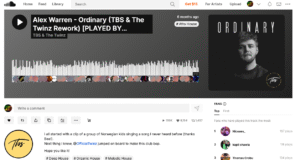
The TBS & The Twinz Rework of Alex Warren’s “Ordinary” is a good example of a popular “Unofficial Remix”.
AI stem creation tools now allow remix producers to break down the components of an original song to be used to create an unofficial remix. With such technology, the speed at which unofficial remixes can be generated is faster than ever before. Often producers use these unofficial remixes they’ve produced to gain followers on SoundCloud, Spotify and Instagram using music focused social unlock tools like Hypeddit and Feature.fm which exchange a free download of the unofficial remixes in trade for a social follow on those platforms. Furthermore, Hypeddit offers top charts of the most streamed and most downloaded tracks offered on its site, so remix producers with unofficial remixes can show off that they are at the top of their game by dominating the overall Hypeddit chart, or within a specific Electronic / Dance music genre chart on Hypeddit. Some remix producers hope the chart action leads them to get the attention of the artist / label so that they can get their remix sanctioned.
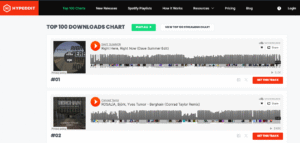
Hypeddit has “Most Streamed” and “Most Downloaded” charts where listeners can find many popular unofficial remixes and garner for the top spot
DJ / Producer Conrad Taylor’s Unofficial remix of ROSALIA’s “Berghain” has racked up almost 250,000 streams and thousands of downloads and given its popularity, the artist hopes Sony Music will make his remix official and available on music services. It is #2 on the “Most Downloaded” techno chart on Hypeddit. Yet the remix was so popular, someone distributed it illegally to DSPs which reflects the risks of not being able to copyright protect a remix work that is already infringing on the rights of the original artist. Taylor describes his unofficial remix saga with ROSALIA’s “Berghain” here in this Instagram reel.
Why release Official Remixes?
Unlike these unofficial remixes, official remixes are NOT meant to be easy bait to gain followers on social media sites, nor are they meant to be easily accessible tools for the DJ trying to reach popular music fans with quick and dirty, low quality club versions of big pop hits. The time and money investment that goes into making and marketing official remixes can vary, but the goal is to get them on to streaming services and at music retail platforms so that they generate revenue and of course delight listeners. And a sought after remix can sell vinyl if the label presses a remix package. Often two electronic / dance music artists can find an easy route to collaborate with each other through official remixes versus creating new original tracks together.
Many official remixes serve to push original tracks into other genre territories so that they can serve audiences who favor genres other than the primary genre of the original artist. DJs might want to play the track but fit it in a set that is stylistically apart from the original track, closer to their own overall sound. If the original track was a deep house tune, a Nu-disco remix version might be appealing for dance focused parties, or a minimal / tech version would do better in a more underground club. A remix can help an original track chart on a genre chart for which it wouldn’t normally have been eligible.
Official remixes can extend the life of a song in the music market. For instance, an original track gets a good volume of streams, downloads, radio and club play and is charting at DJ retail sites upon its release. Then 6-12 months after a track finds some success, official remixes are released giving the track a second chance to pop again and get new editorial coverage. At Soul Clap Records, we released the London based duo 2fox and their track “Elevation (featuring Laville)” on May 17th of 2024. It hit #1 on the Soulful House chart at the DJ retail site Traxsource, and by October of 2024 it was selected as the #2 best track at the Amsterdam Dance Event (ADE) also by Traxsource. What pushed it over the line at ADE was a remix of “Elevation” by house music legend Louie Vega. While the Louie Vega remix of “Elevation” was not yet officially released at that time, it was in the hands of some major DJs who were performing at ADE. These DJs played the track and brought awareness to the original, which allowed the original to get another chart bump 5 months after its initial release, now appearing on this ADE chart. Meanwhile, the Louie Vega remix did see an official release until May 2nd, 2025 – almost a year after the original release. The track again wound up on the charts and on the radio, this time as the Louie Vega remix, with spins of the track across several BBC Radio channels.
Official Remixes at Spotify, Apple Music and Other Streaming Music Services
While official remixes can generate recording revenues and royalty for remix artists, the major DSPs, especially Apple Music, Amazon Music, and Spotify, have NOT made it at all easy for listeners to discover remixes produced by their favorite artists. Furthermore, many DSPs will NOT allow a Remix Artist access to streaming and download analytics about the listener consumption of their remixes. The direct analytics will only be available for the original artists.
One of the most pressing issues is the delivery and display of remixes within an Electronic/Dance artist’s catalog. Remixes are particularly important to electronic artists for obvious reasons.
- For established commercial dance artists (e.g., Calvin Harris, David Guetta, Tiësto), remixes they have produced typically account for 15–30% of their total streams.
- For mid-tier and underground artists, remixes they have produced can represent 30–50% of their total streams, especially when they collaborate with more prominent names.
- For remix-heavy artists, such as DJs and producers who specialize in remixes (e.g., Meduza, R3HAB), more than 50% of total streams may come from remixed works.
The major problem is that remix artists will not have their remixes displayed within their artist profile on Apple, Amazon and Spotify. Which means for many Electronic / Dance music artists 30 to 50% of their music catalog is not displayed on their artist profile on these services.
For bigger Electronic / Dance artists and labels (and their distributors), they may have the clout to make sure that they can get their remixes displayed within their catalog on their artist profile on Apple Music, Amazon Music, and Spotify.
Most Electronic / Dance artists do not have such representation and how their remixes are treated by the DSPs first has to do with how strong their distributors are. There are various levels of distribution partners that the DSPs work with (for instance a major distributor might be a Tier 1 partner, and a self service distributor might be a Tier 3). Furthermore, the remix delivery rules that distributors must follow are nuanced and often changing from year to year, if not quarter to quarter. For example, a Tier 1 distribution partner might be able to communicate to Apple Music that a remix should be appearing on both the profile of the original artist and the remix artist.
Here are the basics of how remixes are treated at streaming services in most cases for Electronic / Dance artists, with Spotify and Apple Music having the largest share of music subscriptions globally.
Spotify:
Remixes will appear in the main catalog of the original artist, but not in the catalog of the remix artist. The remix artist’s remix productions will appear in a special Spotify artist section at the bottom of their artist profile that is non-chronologically organized – listeners will find this section of the artist profile listed as “Appears On”. The fact that the “Appears On” section is non-chronoglically organized means that if a listener is looking for the latest remix by a remix producer, it won’t be clear what the latest release is.
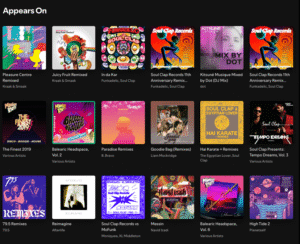
For my music project FSQ, about 60% of our music catalog consists of remixes for other artists. These remixes can be found at the very bottom of our FSQ artist profile on Spotify under the section “Appears On”. Displayed is only one half of this “Appears On” section – we have about 40 remixes listed in this section.
Both the original artist and the remix artist will receive analytics about the consumption of their joint work in the back end analytics platform of Spotify known as Spotify for Artists. No other streaming service beyond Spotify provides for that joint sharing of data between the original artist and the remix artist when it comes to remixes.
Apple Music:
Remixes will appear in the main catalog of the original artist, but not in the catalog of the remix artist. There is no “Appears On” section for most Electronic / Dance remixers, so listeners will not see the remixes of the remix producers on the remix artist profile pages.

For my music project FSQ, on Apple Music you will only find about 10 singles displayed on our artist profile there. None of our remixes appear on our Apple Music artist profile.
There is no sharing of analytics with remixers – the analytics can only be found in the original artist’s dashboard within Apple Music for Artists.
Amazon Music, YouTube Music, Deezer, TIDAL and many other streaming services follow the Apple Music model therefore depriving remix artists of real time analytics in their back end “For Artists” platforms, but more importantly, finding the remixes of your favorite producers in the world of streaming becomes very difficult. A listener can’t go to a remix producer’s artist page to see all of their remixes in one place, they would have to do a search by artist to surface the remixes. Only Spotify features “remixes” in the “Appears On” section of a remix artist’s profile.
Given the statistics I have provided here, you can see how easily 30-50% of an Electronic / Dance artists’ catalog would not be appearing on their artist pages on major streaming services. The idea that this much music catalog would be missing from the listener facing the streaming presence of producers in the industry is a big problem for growing the genre with listeners who aren’t hardcore fans of Electronic / Dance.
In the next part of this series about remixes, I will detail how music metadata is key in the distribution of official remixes and how tiny differences in how remixes are labeled can have giant consequences in terms of listener consumption. And I rate the DSPs and music retailers on a scorecard based on how well they display official remixes, make them available to listeners, and share consumption data with the remix producers.